Journal Club: Medicine
- 4.4
- Rating
- 10.00K
- Installs
- $6.99
- Price

 Analysis by App-foxy
I approached Journal Club: Medicine as a focused reading tool rather than a general medical reference. That distinction matters. Its purpose is to put internal medicine literature within easy reach, and the experience makes the most sense when I already know what I want to review: a topic before rounds, a refresher after seeing a patient, or a compact reading session during a spare moment. It is not trying to replace a full clinical database, a textbook, or professional judgment.
Developed by Peripheral Brain, LLC, this medical app has been available since March 9, 2013. It is listed for Everyone, costs $6.99, and has passed ten thousand installs. Its average of 4.4 from roughly three hundred ratings suggests that the focused approach works well for many users, although a specialist reader should still decide whether the available depth matches their needs.
How I built a useful reading routine
My most productive way to use the app was to give each session a clear job. Instead of opening it casually and expecting it to teach me everything about internal medicine, I treated it as a journal-club companion. I would choose one clinical question, read with that question in mind, and make a short note afterward about what changed in my understanding.
You May Also Like

 Blood Strike: 2.5 Anniversary
Blood Strike’s Loadouts Turn Every Drop Into a Tactical Gamble
A close look at Blood Strike’s custom loadouts: how fast access to signature weapons reshapes its battle royale rhythm, rewards preparation, and narrows the gap between fights.

 Pandora - Music & Podcasts
Pandora’s Music Is Easy to Start, but Harder to Recover
Pandora’s strength is its low-effort path from a seed to a station. Its weak spot is how much confidence it asks you to place in connection, setup, and quiet recovery.

 8 Ball Pool
 Is Built on Rivalries, Rematches, and Routine
A close look at the rivalries, rematches, shared routines, and unanswered safety questions that turn a quick pool match into a persistent mobile community.

 Samsung Music
’s Quiet Strength Is Playing What You Already Own
Its reach comes less from spectacle than from dependable access to a personal library. That simplicity is both the app’s strongest retention engine and its ceiling.

 AccuWeather: Weather Radar
AccuWeather Review: A Quick, Clear Forecast for Everyday Decisions
For everyday plans, the best forecast is the one you can understand quickly. AccuWeather makes rain timing, radar, and local conditions easy to act on, with a few trade-offs.

 Hill Climb Racing
Why Hill Climb Racing Still Turns Crashes Into One More Run
A tiny car, a bumpy hill and one more upgrade: Hill Climb Racing keeps resurfacing because its simple chaos makes every near-miss feel personal.
More From Our News Desk
View All News


That workflow prevents a common problem with medical reading apps: collecting articles without absorbing them. A focused session might involve reviewing literature related to a condition I had encountered, checking a familiar topic from a different angle, or preparing talking points for a discussion. The app becomes more valuable when I use it as part of a repeatable habit rather than as an endless stream of content.
For a realistic everyday scenario, imagine finishing a busy clinic session and remembering a treatment question that came up during the day. I would open the app, search or browse toward the relevant internal medicine topic, and read only with that question in view. If the material answers part of it, I can carry the remaining uncertainty to a trusted guideline or primary source. That division of labor is important: Journal Club: Medicine can start or sharpen the investigation, while a formal reference may be better for definitive recommendations.
I also found it useful to separate reading from decision-making. A literature-focused app can help me understand evidence and identify ideas worth checking, but it should not be the only basis for a patient-specific intervention. Clinical context, current guidance, contraindications, local practice, and the patient’s own circumstances still matter. Used responsibly, the app supports preparation and reflection rather than pretending to be a substitute for those steps.
Who benefits most from the focused format
The strongest audience is likely to be medical students, residents, fellows, physicians, and other readers who already understand the basic language of internal medicine. Experienced users can move quickly because they know which terms, conditions, and study questions deserve attention. Learners may also benefit, but they should expect to bring their own framework for judging study quality and clinical relevance.
I would be more cautious recommending it to someone looking for a broad patient education app. The Everyone content rating describes the age category, not the level of clinical explanation. A person without medical training may find literature-oriented material harder to interpret than a plain-language health resource. Likewise, someone wanting medication interaction checks, symptom triage, or emergency instructions should choose a tool designed specifically for those tasks.
The app is also a better match for readers who enjoy concise, purposeful review than for people who want a fully structured course. A textbook gives a planned progression. A guideline platform often emphasizes recommendations and updates. A general medical search engine may provide wider coverage. This app’s appeal is narrower: it puts journal-club-style reading close at hand and encourages me to engage with internal medicine literature directly.
Settings and preparation that make sessions smoother
Before settling into a routine, I would check the app’s available reading and display controls on the device where I plan to use it. Small choices such as text comfort, screen brightness, and notification behavior can determine whether a short review feels practical or becomes tiring. I would also confirm how the app handles returning to a previous place, because continuity is especially useful when reading in brief intervals.
I would not assume that every medical app is equally comfortable for long reading. A phone is convenient for a quick review between tasks, but a larger screen may be preferable for comparing details or reading for an extended period. My practical advice is to use the phone for capture and short sessions, then move to a larger display when the material deserves slower attention, if the device experience supports that naturally.
Another useful preparation step is deciding where notes will live. Rather than relying on memory, I would keep a simple external record with three headings: the clinical question, the main takeaway, and the point that still needs verification. This avoids turning the app into a storage system for disconnected impressions. It also makes later discussions more precise because I can distinguish what I read from what I concluded.
There is a trade-off here. The fewer tools I combine, the faster the session feels. But a completely self-contained workflow can encourage passive reading. A lightweight note-taking habit adds a little friction while making the app more useful for study, teaching, and follow-up. I prefer that trade because medical literature is rarely valuable merely because I opened it once.
Faster patterns for busy clinical days
My fastest pattern is the question-first pass. I name the issue before opening the material, scan for the part most likely to address it, and stop when I have enough context to decide what deserves deeper reading. This is more efficient than reading every item with equal attention. It also keeps the app from becoming a distraction during a short break.
A second pattern is the two-pass review. On the first pass, I identify the subject, the type of evidence, and the practical question it may answer. On the second, I return only to the sections that affect my understanding. This approach is particularly helpful when I am preparing for a journal club and need to discuss relevance rather than simply summarize everything.
I also like using a recurring topic list outside the app. For example, I might maintain separate themes for inpatient medicine, outpatient follow-up, and exam preparation. When I encounter an article or subject that deserves attention, I add it to the appropriate list instead of interrupting the current task. Later, Journal Club: Medicine becomes the place where I work through that queue, not the place where every new curiosity sends me off course.
Short sessions work best when I define a stopping point. One useful goal might be to explain the article’s practical importance in two sentences, identify one limitation, and write one question for further checking. That is more realistic than promising myself an uninterrupted hour. It also creates a repeatable habit that fits around clinical work and study.
For journal-club preparation, I would pair the app with a structured discussion template. I would record the clinical problem, the population being considered, the intervention or exposure, the comparison, the outcome, and the main weakness I noticed. The app can support the reading portion, while the template forces me to test whether the material actually answers the question I brought to it.
Where the app stops being enough
The main limitation is scope. A focused literature reader is not automatically a comprehensive evidence platform. If I need the latest formal recommendation, exhaustive citation searching, detailed drug information, or a complete overview of a rare condition, I would reach for a more specialized resource. Paying $6.99 may feel reasonable for a compact reading companion, but it does not remove the need for other references.
Another limitation is interpretation. Journal articles can be difficult even for trained readers, especially when the clinical question, population, or outcome differs from the case in front of me. I would be careful not to treat a convenient summary or selected reading path as proof that a conclusion applies directly to a particular patient. The app can help me find and think about literature; it cannot perform the judgment that connects evidence to an individual.
There is also a risk of mistaking accessibility for currency. Because the app dates back to 2013, I would make a habit of checking whether an important topic has newer evidence elsewhere before relying on it for current practice. That is not a criticism of the app’s core idea; it is a normal requirement for medical information. Older material can still be educational, but clinical decisions demand attention to what has changed since publication.
Readers should also consider how they prefer to search. If I want broad discovery across many specialties, a large medical database will usually be more flexible. If I want a formal learning pathway, a course or textbook may be easier to follow. If I want quick bedside calculations or safety checks, a purpose-built clinical utility app is the better choice. This app earns its place when the task is deliberate engagement with internal medicine literature, not when I need every medical function in one screen.
Privacy and professional boundaries are worth handling sensibly as well. I would never enter identifiable patient information into a reading workflow, and I would keep clinical notes separate from casual app use. The safest habit is to phrase questions in general medical terms and use approved systems for anything involving patient records or institutional communication.
What I would ask before buying
Would I use it as my only medical reference? No. I see it as a focused supplement for literature review, discussion, and study. That answer should not discourage a purchase; it simply sets the right expectation and prevents the app from being judged against tools designed for entirely different jobs.
Is it suitable for a beginner? It can be helpful if the beginner is studying medicine and is willing to verify unfamiliar concepts through textbooks, teaching materials, or supervision. It is less suitable for someone who wants plain-language explanations without medical background. The content rating should not be confused with an introductory reading level.
Can it replace journal-club preparation? It can make preparation more convenient, but I would still do the critical appraisal myself. Before presenting a paper, I would check the original context, ask whether the population resembles my practice, and look for limitations that a quick reading session might overlook.
Is the cost justified? For a reader who regularly wants internal medicine literature in a portable format, the one-time price may be easy to justify. For occasional users who already have access to a strong institutional library or a preferred evidence platform, the added value may be smaller. The decision depends less on the amount and more on whether the app fits an existing reading habit.
Does the install base guarantee that it will suit me? No, although more than ten thousand installs and an average of 4.4 show that it has found a real audience. I would treat those figures as useful context, not as a replacement for matching the app to my workflow. A well-rated focused tool can still be the wrong choice for someone seeking comprehensive clinical decision support.
My verdict after making it part of a routine
Journal Club: Medicine works best when I approach it with discipline. The strongest experience comes from choosing a question, reading with a purpose, recording the practical takeaway, and verifying anything that could influence patient care. That workflow turns a small medical app into a useful companion for continuous learning.
I especially like the way its narrow purpose encourages repeatable habits. The question-first pass, the two-stage review, and the external note template are simple techniques, but they prevent passive scrolling and make short sessions count. These are not flashy features; they are the kinds of habits that help an experienced user get more value from a focused tool.
My reservations are equally clear. It should not be treated as a current, all-purpose clinical authority, and readers who need broad searching, formal guidelines, or patient-facing explanations may be happier elsewhere. The app asks me to bring medical judgment, context, and a second source when the stakes are high.
I recommend it to medical readers who want a compact journal-club companion, not to anyone looking for a complete clinical reference. At $6.99, it is a sensible choice when its focused literature workflow matches the way you already study. If that sounds like your routine, Journal Club: Medicine can make those small gaps between larger tasks genuinely useful.
FAQs for Journal Club: Medicine
01What is Journal Club: Medicine used for?
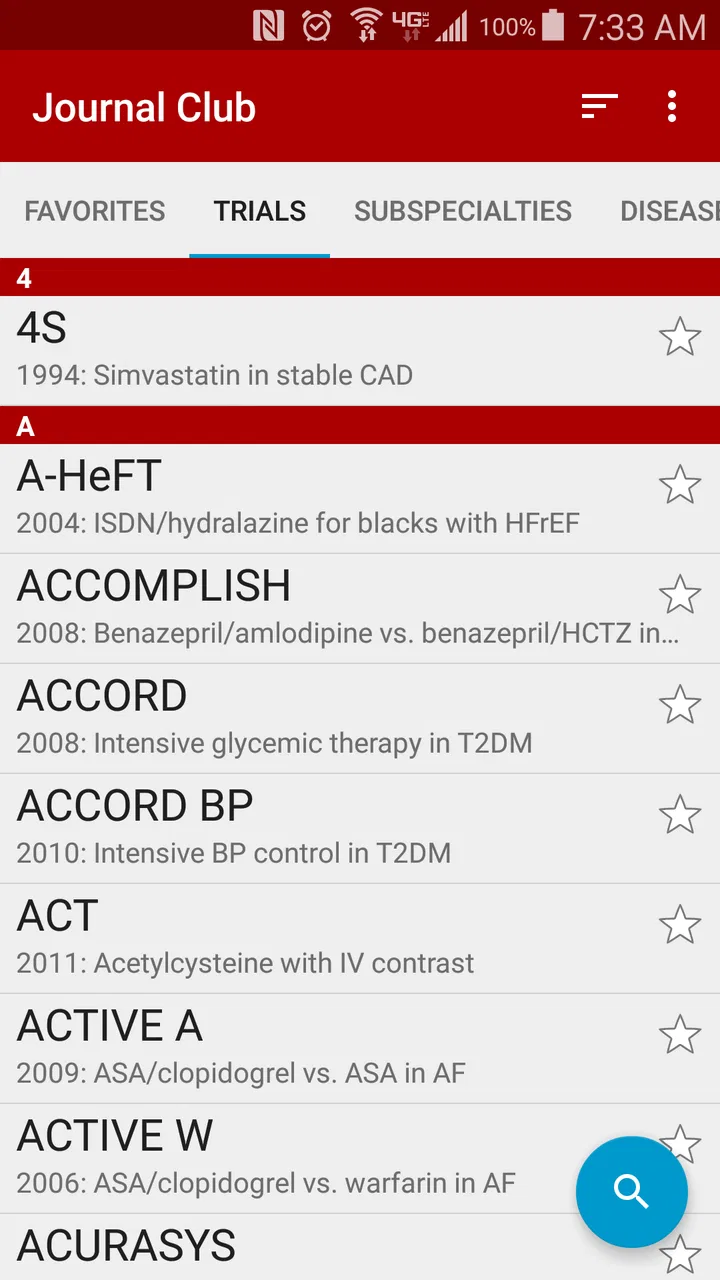
Journal Club: Medicine is designed to help medical students, residents, physicians, and other healthcare professionals keep up with medical research. It presents journal articles and research summaries in a structured format, making it easier to review new evidence, follow important clinical topics, and support ongoing medical education without searching through numerous publications manually.
02Is Journal Club: Medicine suitable for medical students and beginners?
Yes, the app can be useful for medical students and healthcare learners who want to develop a habit of reading medical literature. Its organized presentation may make research easier to approach, although users should still learn how to evaluate study design, limitations, statistics, and clinical relevance. It should complement textbooks, lectures, and guidance from qualified educators.
03Can Journal Club: Medicine replace professional medical advice or clinical guidelines?
No. Journal Club: Medicine is an educational and research-reading tool, not a diagnostic or treatment service. Information found in journal articles may be preliminary, limited to specific patient groups, or interpreted differently as evidence develops. Healthcare professionals should verify important findings through current guidelines, trusted databases, institutional policies, and appropriate clinical judgment before making decisions.
04Does the app provide full medical journal articles or only summaries?
The available content may vary depending on the article, publication, and access rights. Some entries can provide summaries, abstracts, discussions, or links to the original source, while complete articles may require access through a publisher, university, hospital, or personal subscription. Before downloading, users should check the app’s current content and access model if full-text reading is essential.
05Is Journal Club: Medicine free to download and use?
The app’s download availability, included features, advertising, and possible subscription or in-app purchase options can vary by platform and region. It is advisable to review the current Google Play or App Store listing before installing it. Pay particular attention to premium content, renewal terms, privacy permissions, and whether offline access or advanced research features require payment.
Pros
- Focused on evidence-based medicine and clinical research discussions.
- Useful for students
- residents
- and healthcare professionals.
- Encourages critical appraisal of published medical literature.
- Can support preparation for journal club presentations.
- Helps users discover relevant topics across medical specialties.
Cons
- Content quality may depend on the availability of active contributors.
- Some discussions may be too advanced for beginners.
- Medical terminology can make navigation and reading challenging.
- It should not replace official clinical guidelines or expert advice.
- Limited appeal for users outside healthcare and medical education.

Journal Club: Medicine
Gallery